
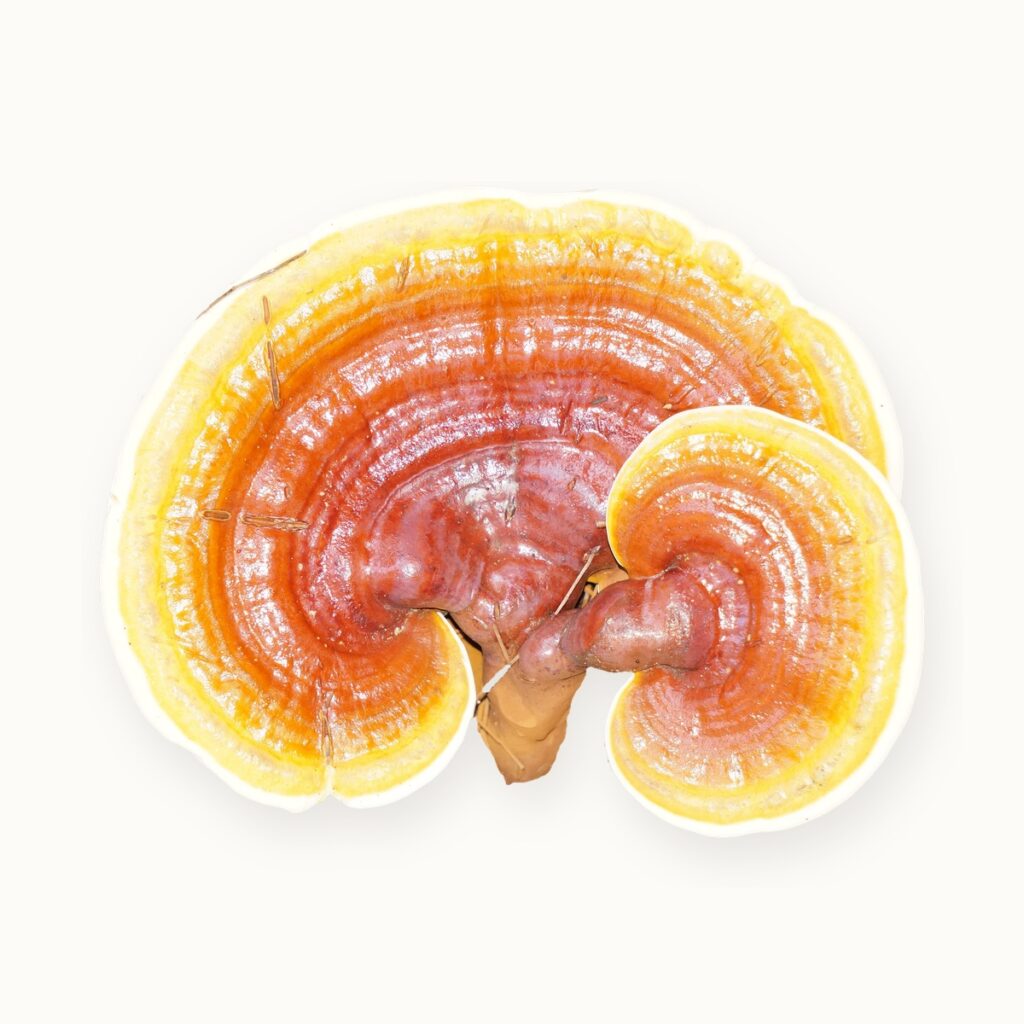
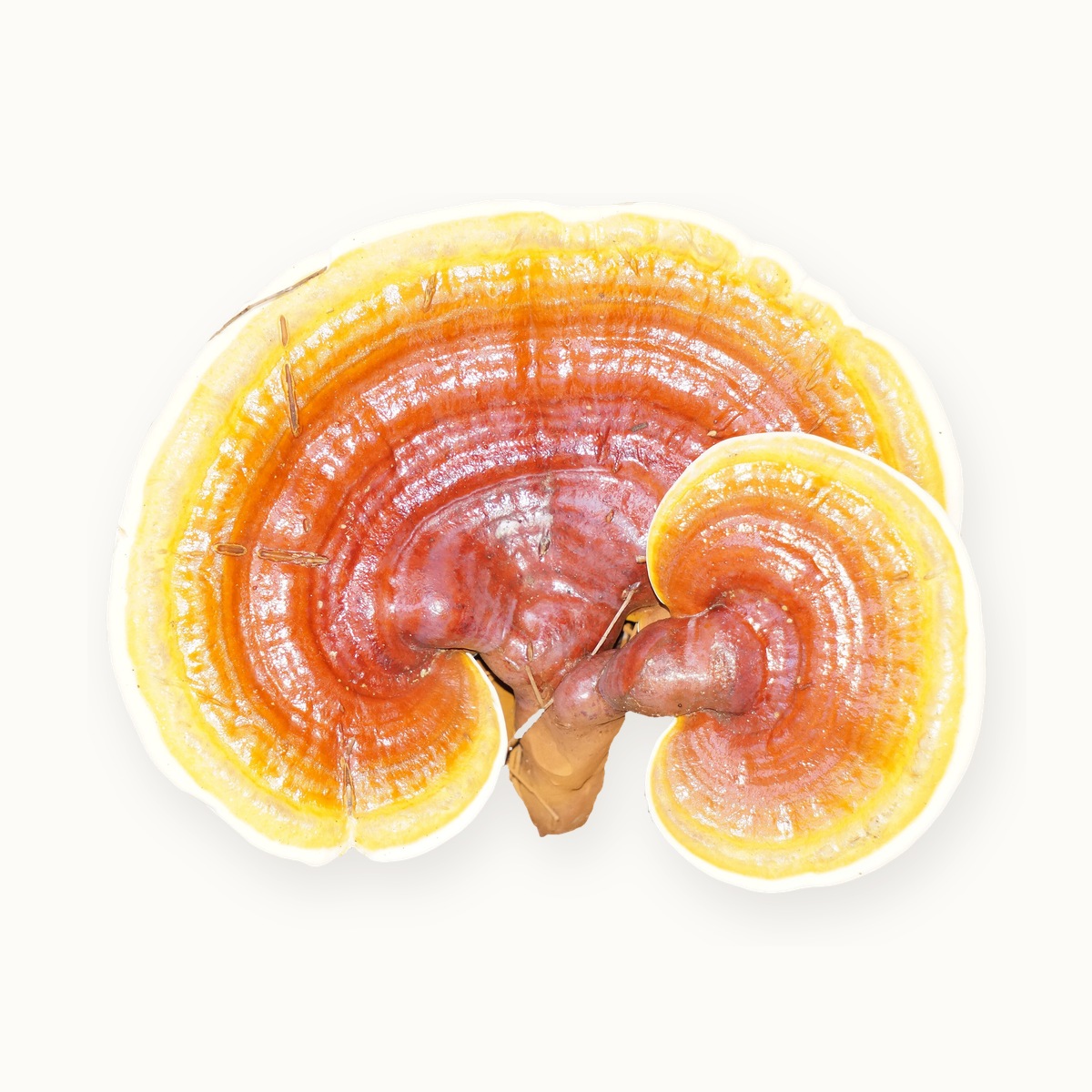
Reishi Mushroom Extract (Ganoderma lucidum)
Dual-standardized reishi extract from log-cultivated fruiting bodies – 30% polysaccharides with 6% triterpenes. Mushroom extract for immune-support capsules, gummies, beverages and adaptogen blends, with USDA/EU organic option.
- Active: Polysaccharides 30% + Triterpenes 6% (UV/HPLC)
- CAS: 81907-62-2 (Ganoderic Acid A)
- Appearance: Brown fine powder
- Packaging: 25kg drum
What Is Reishi?
Reishi (Ganoderma lucidum), known in China as lingzhi, is the most famous medicinal mushroom in East Asia, used for over two millennia in East Asian tonic traditions. Its two main active families are beta-glucan polysaccharides, which are studied in immune-receptor research, and triterpenes such as ganoderic acids, which carry antioxidant and calming properties. Dual standardization to both families is the quality benchmark, because many cheap reishi powders contain grain filler from mycelium-on-grain cultivation. Core Nutrix supplies extract from true log-cultivated fruiting bodies at 30% polysaccharides with 6% triterpenes.
Key Facts at a Glance
- Active content: Polysaccharides 30% (UV) + Triterpenes 6% (HPLC)
- CAS number: 81907-62-2 (Ganoderic Acid A)
- Source: Log-cultivated fruiting bodies (no mycelium-on-grain)
- Appearance: Brown fine powder
- Organic: USDA / EU organic option
- Typical serving: 500-1500 mg per day
- Packaging: 25 kg drum (custom formats available)
- Shelf life: 24 months in sealed, cool, dry storage
Origin & Sourcing
Cultivated on natural hardwood logs rather than grain substrate, which produces the fruiting bodies that carry the full polysaccharide and triterpene profile. Fruiting bodies are harvested, sliced, extracted with hot water and ethanol, and concentrated before spray drying. Dual standardization is verified per batch by UV for polysaccharides and HPLC for triterpenes, with heavy-metal and microbiology panels completing the release testing. USDA and EU organic options are available for organic-certified lines.
Key Benefits
- Beta-glucan polysaccharides studied for immune-receptor interactions
- Triterpenes add antioxidant and calming properties
- Dual-standardized for consistent active content
- Log-cultivated fruiting bodies, not grain mycelium
- Adaptogen positioning for stress-support and sleep-support formulas
- USDA / EU organic option for clean-label brands
Applications
Immune-support capsules, sleep and calm gummies, mushroom coffee and latte mixes, adaptogen complexes, functional teas and beauty-from-within formulas. Reishi pairs with ashwagandha, lion’s mane and cordyceps in multi-mushroom blends, and the organic grade supports premium certification claims. Beyond capsules and coffee blends, reishi appears in sleep gummies and beauty formulas, and it partners with ashwagandha, magnesium and zinc across immune-support and calm lines. The organic grade anchors certified mushroom complexes.
Why 2026 Matters
Functional mushrooms have grown from niche to mainstream, with reishi anchoring the immune-support and calm corner of the category. The market is also becoming quality-conscious: brands now advertise fruiting-body sourcing and dual standardization on-pack, because grain-grown mycelium products have eroded consumer trust. A log-cultivated, dual-standardized reishi with an organic option gives brands exactly the differentiation the current market rewards. Quality transparency is now the category’s growth driver: certification marks, fruiting-body guarantees and dual-standardization claims are what buyers compare. Reishi also benefits from the broader adaptogen narrative in stress and sleep, where it pairs with ashwagandha. For OEM customers, reishi is the mushroom that anchors immune-support and calm lines while other species fill energy and cognitive niches.
Science Snapshot
Beta-glucans in reishi interact with immune receptors such as dectin-1 on macrophages, which is the basis for the immune-receptor research, while triterpenes such as ganoderic acids show antioxidant activity in preclinical studies. Human research is thinner than for some botanicals but consistently reports immune-marker changes and modest sleep and fatigue benefits in stressed populations, with effects typically reported after several weeks of daily use. Immunologically, the beta-glucan story matters most: the beta-1,3/1,6 branching pattern determines receptor recognition, and extraction conditions control the molecular-weight range that matters for activity. Triterpene analysis by HPLC profiles ganoderic acids A, B, C and others, giving each batch a chemical fingerprint. This dual-panel testing is the difference between a reishi extract that can support real label claims and a brown powder of unknown composition.
Quality & Specifications
- Actives: Polysaccharides 30% (UV) + Triterpenes 6% (HPLC)
- Source: Log-cultivated fruiting bodies
- Appearance: Brown fine powder
- Organic: USDA / EU option
- Packaging: 25 kg drums (custom formats available)
- Shelf life: 24 months in sealed, cool, dry storage
MOQ
- Sample: from 1 kg (freight collect)
- Bulk: from 25 kg
- Tiers: 100 kg / 500 kg / 1,000 kg — tiered pricing on request
FOB Price
- Ports: Xi’an / Shanghai / Shenzhen, China
- Indicative: USD 15–30 / kg (FOB, standard grade)
- Sea freight & insurance not included
Lead Time
- Standard: 15–60 days (by quantity & specification)
- Expedited: 7–15 days (in-stock, small batch)
- Counted from: sample approval + deposit received (next business day)
Indicative FOB ranges for standard grades. Exact pricing depends on specification, grade and quantity — submit the inquiry form for a formal quotation.
Safety & Regulatory
Well tolerated at standard servings of 500-1500 mg per day. Use with caution with autoimmune conditions or blood-thinning medication – consult a healthcare professional.
Formulation Notes
Reishi is brown, earthy and bitter, so capsules are the most common format, with gummies needing strong flavor masking. The powder disperses in coffee and cocoa drinks where its roasted notes blend naturally. It pairs with ashwagandha and magnesium in sleep stacks, with lion’s mane for cognitive blends, and with vitamin C and zinc in immune-support formulas. Choose the organic grade when certification is part of the brand promise.
How It Compares
- Fruiting body vs mycelium-on-grain: fruiting bodies carry the full polysaccharide and triterpene profile; grain-grown mycelium is largely starch and dilutes actives.
- Reishi vs lion’s mane: reishi targets immune and calm positioning, while lion’s mane is positioned for cognitive-support positioning.
- Reishi vs cordyceps: cordyceps is marketed for energy and endurance; reishi for immune-support and relaxation – they are often combined in mushroom complexes.
- Dual-standardized vs polysaccharide-only: single-parameter grades may lack meaningful triterpenes; dual standardization guarantees both active families.
Frequently Asked Questions (FAQ)
What is the dual standardization?
30% polysaccharides (UV) with 6% triterpenes (HPLC), from log-cultivated fruiting bodies.
Can you provide a COA and third-party test report?
Yes. Every batch ships with a Certificate of Analysis, and third-party testing is available on request.
What is the MOQ and packaging?
Standard packaging is a 25kg drum. Please contact us for current MOQ and sample availability.
Is this from fruiting bodies or mycelium?
True log-cultivated fruiting bodies – no mycelium-on-grain material, which keeps the active profile intact.
Is an organic version available?
Yes, USDA and EU organic certified grades are available for organic product lines.
Which grade suits a gummy?
The standard brown powder works in gummies with proper flavor masking; we can recommend a grade and usage level for your recipe.
What serving size is typical?
Common servings run 500-1500 mg of extract per day, depending on positioning.
Why are polysaccharides measured by UV and triterpenes by HPLC?
UV is the conventional method for total polysaccharides and HPLC is used for the triterpene profile. The method matters because a UV polysaccharide figure can include starch and other non-fungal carbohydrates, so the COA should state the method next to each result rather than a single “polysaccharides” number.
Can reishi extract be blended with CS-4 or other mushrooms?
Yes, we can supply blends, with each species and its extract ratio declared separately. Note the EU position: CS-4 (Samsoniella hepiali) is outside the Novel Food scope for food supplements, while Cordyceps militaris remains a Novel Food, so the blend’s documentation must match the species actually used.
What health claims can we make for reishi in the EU?
There is no authorised EU health claim for reishi, so wording that promises a health outcome is a health claim under Regulation 1924/2006 without an authorised basis. Composition statements, traditional-use context and factual descriptions of the extract are the safe ground; the claim wording is the brand’s responsibility in its own market.
Is reishi a Novel Food in the EU?
Reishi has a history of food use in parts of the EU, but the position is not uniform across member states and depends on the part and preparation used. We provide a dated written position with the batch documents; confirm the current status for your destination market before launch.
How do I verify the species identity?
ITS sequencing is the standard method, and strain-specific PCR is used where a named strain is claimed. Ask for the identity report itself rather than a statement on the COA – it is the document that survives a customer audit.
How to Get Started
- Tell us your format and target dose – capsules, powders, tablets, gummies or beverages.
- We confirm the matching grade, send the specification sheet and a free sample.
- Approve the sample and run a trial batch; we lock the COA and lead time.
- Scale to full production with batch-to-batch consistency guaranteed.