
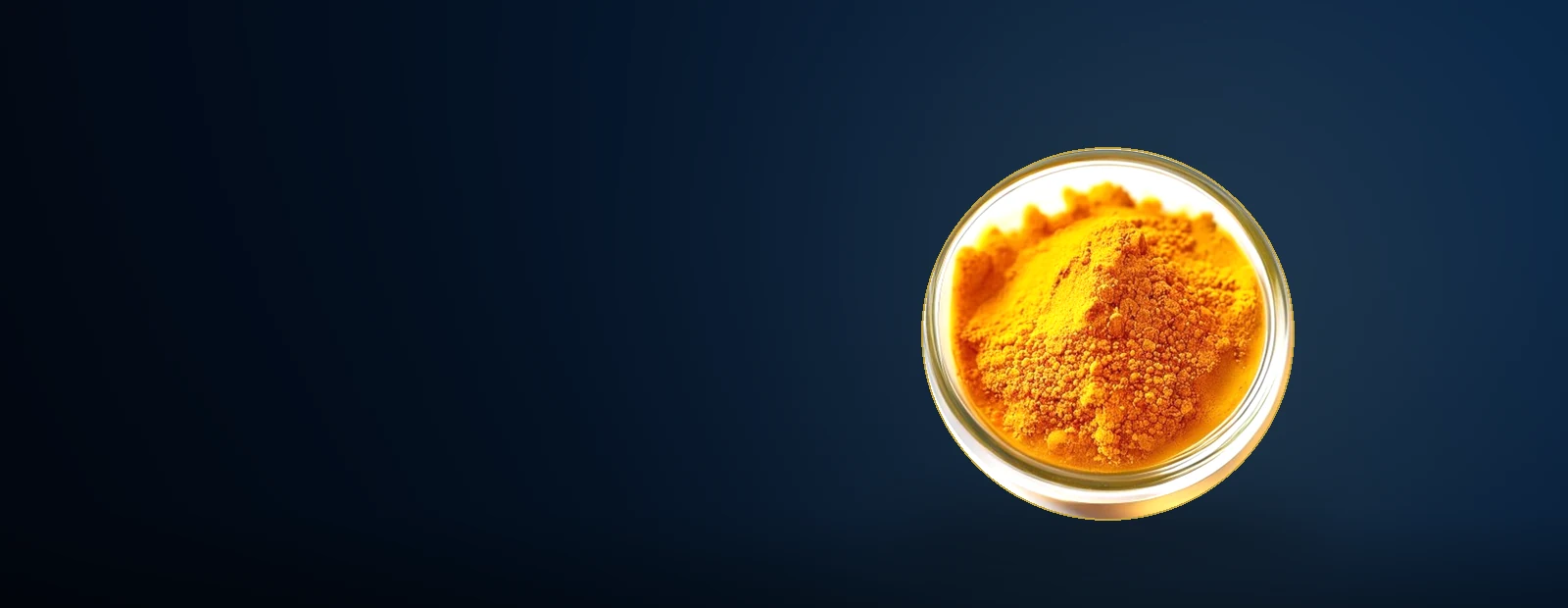
Feed Grade Turmeric Extract (10–95% Curcuminoids)
Curcumin for premix plants and feed mills, supplied at 10%, 20%, 40% and 95% on a silica or carrier base. Packed for blending, priced for tonnage, documented for feed registrations rather than supplement labels.
- Active: Curcuminoids 10–95% (HPLC)
- Carrier: Silica or calcium carbonate, declared
- Appearance: Yellow to orange-brown powder
- Packaging: 25 kg bag or 500 kg jumbo
Why Feed Buyers Use Curcumin
Three reasons come up in most conversations with premix plants. The first is antioxidant capacity: curcumin is a natural alternative or partial replacement for synthetic antioxidants in finished feed, particularly where the label wants a “no BHA/BHT” story. The second is pigmentation — curcumin contributes yellowness to egg yolk and broiler skin, and can supplement lutein or replace part of it when the price spread justifies it. The third is the botanical claim itself: a turmeric line on a premium feed or pet product.
What curcumin is not is a substitute for a coccidiostat, an antibiotic growth promoter or a therapeutic. Formulators who expect a health effect at 100 g/t are usually disappointed; the people who get value treat it as an antioxidant and colour ingredient with a defensible story.
Which Grade for Which Species
- Poultry — broilers and layers. 10–20% grades are the practical choice for inclusion at 200–500 g/t. Higher grades concentrate the active and reduce the weight added to the mixer, which matters when the premix has limited carrier space.
- Swine. Usually 10–20% at 150–400 g/t in grower and finisher diets, often combined with other plant antioxidants.
- Aquaculture. 20–40% grades, because pellet extrusion heat destroys part of the curcumin and an overage is normal. Confirm the loss in your own extruder.
- Pet food. 10–20% grades at lower inclusion, positioned as a botanical antioxidant; the label claim rules are tighter than for livestock, so check the target market first.
- Ruminants. Less common, but used in rumen-protected antioxidant blends and in mineral premixes.
Key Facts at a Glance
- Curcuminoids: 10%, 20%, 40%, 95% (HPLC)
- Carrier: Silica, calcium carbonate or rice hull, declared per lot
- Particle size: 80 mesh standard; 60 mesh on request
- Moisture: ≤ 8%
- Packaging: 25 kg multiwall bag, 500 kg jumbo bag
- Shelf life: 24 months sealed, dry storage below 25 °C
The Tests That Matter in Feed
- Aflatoxin B1. Non-negotiable for a rhizome-derived material going into animal feed. Ask for the limit and the method.
- Heavy metals. Arsenic and lead, with cadmium and mercury alongside.
- Residual solvent. Feed-grade material still has to meet the destination market’s limits.
- Microbiology. Salmonella absence and Enterobacteriaceae counts; feed mills audit this more than food plants do.
- Dioxins and PCBs. Requested by EU buyers for plant-derived feed materials; confirm whether your lot needs it.
- Assay. Total curcuminoids by HPLC, with the carrier declared so the inclusion rate is calculated on the right basis.
MOQ
- Sample: from 1 kg (freight collect)
- Bulk: from 500 kg
- Tiers: 1 t / 5 t / 20 t — tiered pricing on request
FOB Price
- Ports: Qingdao / Shanghai / Tianjin, China
- Indicative: USD 4–9 / kg (FOB, 10–20% grade)
- Sea freight & insurance not included
Lead Time
- Standard: 20–40 days
- Expedited: 10–15 days (stocked grades)
- Counted from: PO + deposit received
Indicative FOB ranges for feed-grade material. Assay, carrier and testing panel change the price — submit the inquiry form for a formal quotation.
Regulatory Notes
Turmeric and its extracts are handled differently in food and feed law, and the difference is not cosmetic. In the EU, curcumin (E100) is authorised as a food colourant, while feed use depends on the additive category and the authorisation for the target species. In the US, turmeric is a GRAS spice and appears in AAFCO ingredient definitions, but claims on a feed label are still restricted. Before you print a bag, confirm three things with your regulatory team: the legal status in the destination market, the permitted claim wording, and whether the carrier is allowed at your inclusion rate.
FAQ
Is feed grade different from food grade?
Same molecule, different specification and documentation. Feed grade is tested against feed limits, packed in multiwall bags and priced for tonnage; food grade carries a food-safety dossier and typically tighter microbiological limits.
What inclusion rate should I start with?
For a 10% grade in poultry, 200–500 g/t is a common starting range. Confirm with your nutritionist and run a trial — extrusion, pelleting and storage all change what the bird actually receives.
Can it replace synthetic antioxidants completely?
Usually not one-for-one. Curcumin is effective in combination and at the right dose, but oxidative stability testing on the finished feed is the only way to know how much you can reduce the synthetic part.
Do you supply 95% for feed?
Yes, when the economics work — high-grade material is usually specified in aquaculture and premium pet products where the inclusion rate is small.
Related Reading
- Curcumin extract 95%, the food and supplement grade.
- Turmeric root powder, for whole-spice inclusion.
- Defatted turmeric powder, the fibre stream for feed and pet food.